

Latensy: High-Signal Uptime & Performance Monitoring
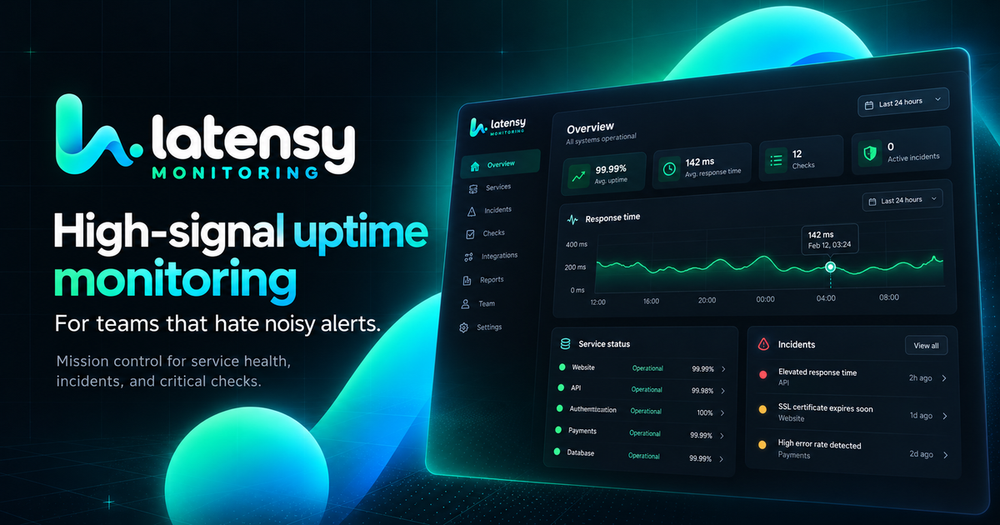
Latensy is a focused service-health platform designed to transform raw monitoring checks into clear operating signals for teams. Unlike basic uptime tools that merely report up/down status, Latensy provides degradation tracking, incident confirmation with consecutive-failure rules, and confidence levels to eliminate noisy alerts.
The platform features a Mission Control dashboard showing downtime, degraded time, active and confirmed incidents, and at-risk services. Teams can organize services with tags for client, environment, owner, and criticality, then route alerts via email, Slack, or webhooks with criticality and impact attachments. Executive Summary and Impact Reports provide stakeholder-ready metrics including uptime percentages, mean time to detect/recover, impact minutes, and revenue at risk. Public status pages with SVG badges and JSON APIs, plus CSV/JSON data export, make Latensy suitable for agencies managing multiple clients and teams needing clear service health communication.
Key Features
- 12+ check types: HTTP(S), keyword, SSL, DNS, port, ping, domain expiration, cron heartbeat, REST API, GraphQL, WebSocket, and database reachability
- Incident confirmation: Consecutive failures before alerting; slow responses tracked as degraded
- Degradation monitoring: P95 latency tracking with at-risk detection thresholds
- Alert routing: Email, Slack, and webhook notifications with criticality tags
- Service organization: Tags for client, environment, owner, and criticality ranking
- Reporting: Executive Summary, Impact Reports, scheduled email reports, CSV/JSON export
- Public status pages: Per-client status pages with 24-hour history and live SVG badges
- EU-hosted infrastructure: All checks performed from Germany, data stays in EU
Primary Use Cases
- SaaS teams: Monitor APIs and customer-facing services before customers notice issues
- Agencies: Manage multiple client services with filtered views and per-client status pages
- Platform teams: Track internal tools, databases, cron jobs, and infrastructure components
- Ecommerce operators: Protect checkout flows, payment webhooks, and product feeds with revenue impact tracking
- Any team: Replace noisy basic checkers with confidence-building incident confirmation and degradation visibility


